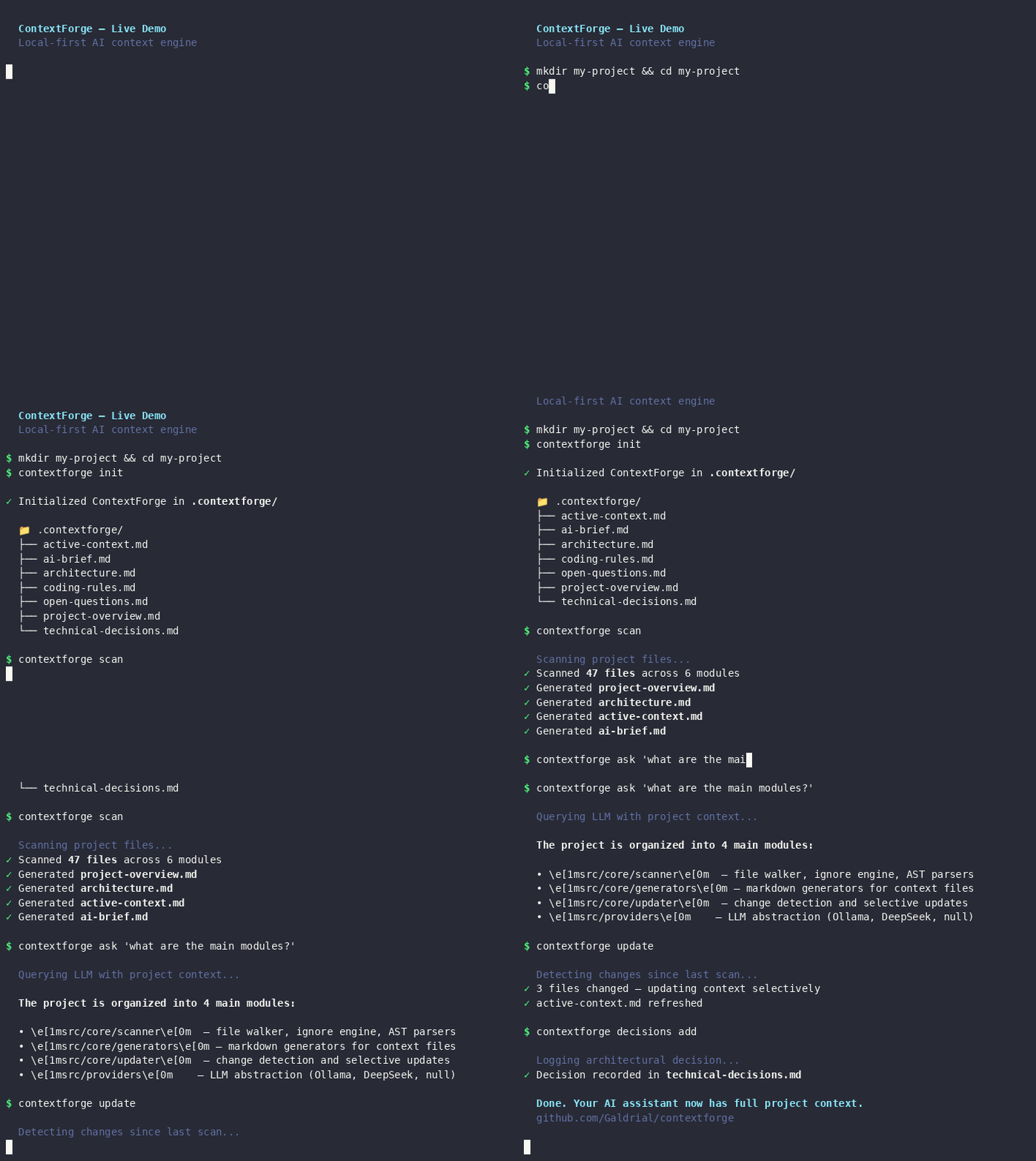
Motore di memoria locale per developer e agenti AI. Scansiona la codebase e costruisce un layer di contesto strutturato e versionato su Git, queryabile dal terminale o iniettabile come context window per qualsiasi LLM.

Local-first project memory engine for developers and AI agents.
AI assistants forget context between sessions, hallucinate project details, and have no awareness of decisions made weeks ago. ContextForge solves this by maintaining a local, deterministic, git-tracked memory layer of your codebase — structured Markdown documents that capture architecture, active context, technical decisions, and open questions.
This memory can be queried directly from the terminal or injected as a precise context window when prompting any LLM — saving 60-80% on token overhead compared to raw codebase dumps.
contextforge init → scaffold the memory layer + run initial scan
contextforge scan → analyse the repo and populate all docs
contextforge update → re-sync only what changed (SHA-256 diff)
contextforge ask "how is authentication handled?"

Modern AI assistants have no persistent memory of your project. Every session starts from scratch. ContextForge fixes this by maintaining a local, deterministic, git-tracked memory that you control completely:
null providerupdate detects file-level changes via SHA-256 hashes and regenerates only affected documentsbrief compresses context into a token budget you set, safe to paste into any LLM promptContextForge is organised in three layers:
┌─────────────────────────────────────────────────┐
│ CLI layer │
│ init · scan · update · decisions · brief · ask │
└─────────────────────┬───────────────────────────┘
│
┌─────────────────────▼───────────────────────────┐
│ Core layer │
│ │
│ ┌──────────┐ ┌──────────┐ ┌───────────────┐ │
│ │ Scanner │ │ Updater │ │ Generators │ │
│ │ │ │ │ │ │ │
│ │IgnoreEng │ │ChangeDet │ │ProjectOverview│ │
│ │FileWalker│ │SelectUpd │ │Architecture │ │
│ │Summarizer│ └──────────┘ │ActiveContext │ │
│ │ Parsers │ │AIBrief │ │
│ └──────────┘ └───────────────┘ │
│ │
│ ┌──────────────────────────────────────────┐ │
│ │ Query / Retriever │ │
│ │ TF-IDF-style keyword scoring over .md │ │
│ └──────────────────────────────────────────┘ │
└─────────────────────┬───────────────────────────┘
│
┌─────────────────────▼───────────────────────────┐
│ Providers layer │
│ OllamaProvider · DeepSeekProvider │
│ NullProvider (offline) │
└─────────────────────────────────────────────────┘
| Module | Responsibility |
|---|---|
IgnoreEngine |
Layers .gitignore + .contextforgeignore + hardcoded defaults. Filters binary files and files > 500 KB. |
FileWalker |
Recursive directory traversal delegating every path decision to IgnoreEngine. |
Summarizer |
Reads each file and builds a ProjectSummary — imports, exports, classes, functions, TODOs, git metadata. Dispatches structural parsing via PARSER_REGISTRY. |
parsers/* |
Regex-based structural extraction for 12 languages: TypeScript, JavaScript, Python, Vue, Svelte, PHP, Ruby, Go, Java, Kotlin, C#, Rust. |
| Module | Responsibility |
|---|---|
ChangeDetector |
Computes SHA-256 hashes for all current files and diffs against .contextforge/local/meta.json. |
SelectiveUpdate |
Decides which generators need to re-run based on the change diff. |
Each generator receives a ProjectSummary and produces one Markdown document:
| Generator | Output file |
|---|---|
generateProjectOverview |
project-overview.md |
generateArchitecture |
architecture.md |
generateActiveContext |
active-context.md |
generateAIBrief |
ai-brief.md |
retrieveContext implements keyword-frequency retrieval over all Markdown files in .contextforge/. Files are split into sections at ##/### headings; each section is scored by the fraction of query terms matched, and the top-5 chunks are returned and fed to the active LLM provider.
contextforge/
├── src/
│ ├── cli/
│ │ ├── index.ts # CLI entry point (Commander)
│ │ └── commands/
│ │ ├── init.ts
│ │ ├── scan.ts
│ │ ├── update.ts
│ │ ├── decisions.ts
│ │ ├── brief.ts
│ │ └── ask.ts
│ ├── core/
│ │ ├── scanner/
│ │ │ ├── file-walker.ts
│ │ │ ├── ignore-engine.ts
│ │ │ ├── summarizer.ts
│ │ │ └── parsers/ # 12 language parsers
│ │ ├── updater/
│ │ │ ├── change-detector.ts
│ │ │ └── selective-update.ts
│ │ ├── generators/
│ │ │ ├── project-overview.ts
│ │ │ ├── architecture.ts
│ │ │ ├── active-context.ts
│ │ │ └── ai-brief.ts
│ │ └── query/
│ │ └── retriever.ts
│ └── providers/
│ ├── base.ts # LLMProvider interface
│ ├── factory.ts
│ ├── ollama.ts
│ ├── deepseek.ts
│ └── null.ts
├── .contextforge/ # Memory layer (git-tracked)
│ ├── project-overview.md
│ ├── architecture.md
│ ├── active-context.md
│ ├── coding-rules.md
│ ├── technical-decisions.md
│ ├── open-questions.md
│ ├── ai-brief.md
│ └── local/ # Machine-local, git-ignored
│ └── meta.json # File hashes for incremental updates
└── dist/ # Compiled output (tsup)
git clone https://github.com/simonecamerano/contextforge.git
cd contextforge
npm install
npm run build
npm link # makes `contextforge` available globally
npx contextforge init
initInitializes ContextForge in the current directory. Scaffolds .contextforge/ with seven starter Markdown files, creates agent rules at .agent/rules/scelta_modello.md, and immediately runs a full scan.
contextforge init
Files created:
.contextforge/
├── project-overview.md # Project description and tech stack
├── architecture.md # Module structure and architectural decisions
├── active-context.md # Current work state, active branch, TODOs
├── coding-rules.md # Style guide and coding conventions (manual)
├── technical-decisions.md # Historical ADR log
├── open-questions.md # Open bugs and questions (manual)
└── ai-brief.md # LLM-optimised summary
scanFull repository scan. Walks every file, builds a ProjectSummary, and overwrites the three auto-generated docs. Writes SHA-256 hashes to meta.json as baseline for update.
contextforge scan
updateIncremental sync. Diffs current file hashes against meta.json and regenerates only affected documents. Significantly faster than scan on large repositories.
contextforge update
| Change type | Documents regenerated |
|---|---|
| Source file modified/added/removed | architecture.md, active-context.md |
Manifest changed (package.json, etc.) |
project-overview.md + above |
| No changes | Nothing |
decisionsRecords a new Architecture Decision Record (ADR) in technical-decisions.md. Options can be supplied as flags or entered interactively.
contextforge decisions \
--title "Use Zod for schema validation" \
--context "Need runtime validation of external API responses" \
--decision "Adopt Zod as the single validation library" \
--alternatives "Joi, Yup, hand-rolled validators" \
--consequences "Smaller bundle, TypeScript-first inference; adds a runtime dependency"
briefGenerates ai-brief.md — a token-budget-aware summary of the entire project, safe to paste directly into any LLM prompt.
contextforge brief # default 4000 token budget
contextforge brief --budget 1500 # tight budget
contextforge brief --budget 8000 # generous budget
askRetrieves relevant sections from .contextforge/ documents and either prints them (offline) or sends them to an LLM for a synthesised answer.
# Offline — prints raw retrieved chunks
contextforge ask "where are the parsers defined?"
# With Ollama (local)
contextforge ask "how does the ignore engine work?" --provider ollama
# With DeepSeek (cloud)
contextforge ask "what technical decisions have been made?" --provider deepseek
Runs open-source models entirely on your machine — no API key required.
curl -fsSL https://ollama.com/install.sh | sh
ollama pull llama3
contextforge ask "explain the scanner" --provider ollama
export DEEPSEEK_API_KEY=sk-xxxxxxxx
contextforge ask "summarise recent decisions" --provider deepseek
No provider configured — prints retrieved chunks with relevance scores. Useful for inspecting what context would be sent to a model.
| Variable | Default | Description |
|---|---|---|
CONTEXTFORGE_PROVIDER |
null |
Default LLM provider (ollama, deepseek, null) |
OLLAMA_HOST |
http://localhost:11434 |
Ollama server URL |
OLLAMA_MODEL |
llama3 |
Default Ollama model |
DEEPSEEK_API_KEY |
— | Required for DeepSeek |
DEEPSEEK_MODEL |
deepseek-chat |
Default DeepSeek model |
.contextforge/ Directory| File | Type | Description |
|---|---|---|
project-overview.md |
Auto-generated | Project name, stack, dependencies, scripts |
architecture.md |
Auto-generated | Module-by-module export/import map |
active-context.md |
Auto-generated | Current branch, recent commits, TODOs |
coding-rules.md |
Manual | Team style guide and conventions |
technical-decisions.md |
Append-only | ADR log managed by decisions |
open-questions.md |
Manual | Bugs, questions, areas of uncertainty |
ai-brief.md |
Auto-generated | Token-budget-aware summary for LLMs |
local/meta.json |
Machine-local | File hashes baseline — git-ignored |
Commit everything except local/. The auto-generated files keep a browseable history of your project's evolution.
Three-layer ignore system:
| Priority | Source | Notes |
|---|---|---|
| 1 (lowest) | Built-in defaults | node_modules/, .git/, dist/, build/, coverage/, .contextforge/ |
| 2 | .gitignore |
All rules from the project's existing .gitignore |
| 3 (highest) | .contextforgeignore |
ContextForge-specific exclusions |
Additionally: files > 500 KB and binary files are always excluded.
When you run contextforge init, it creates an agent rules file at .agent/rules/scelta_modello.md. In an agent-supported IDE (Claude Code, Cursor, Windsurf):
.contextforge/ and runs contextforge update automaticallyactive-context.md and architecture.md directly into the implementing model's promptResult: 60-80% reduction in token overhead on large codebases.
npm test # run all tests once
npx vitest # watch mode
Test coverage includes all parsers, scanner modules, updater, generators, providers, and retriever.
npm install
npm run build # compile once
npm run dev # watch mode (rebuilds on save)
npx eslint .
npx prettier --write .
Targets Node.js 20, compiled to ESM via tsup.
Simone Camerano — AI workflow engineer and full stack developer.
I build tools that solve real problems in development workflows. ContextForge came from a concrete frustration: every AI-assisted coding session starts from scratch, with no memory of what was decided, why, or where the project stands. This is the infrastructure layer that fixes that.
MIT